
India's urban landscape faces a mathematical problem with no easy answer. Delhi adds roughly 1,400 new vehicles daily. Bangalore's car population grows by nearly 400,000 annually. Mumbai's land costs in prime areas have crossed ₹1 lakh per square foot. Yet parking infrastructure remains stuck in horizontal thinking, a mismatch that's becoming impossibly expensive.
The solution isn't finding more land. It's using vertical space intelligently. That's where tower parking systems are quietly transforming urban development across India.
The Space Efficiency Revolution
Traditional parking follows a wasteful pattern. Whether basement levels or multi-story structures, conventional parking requires ramps, circulation lanes, turning radius, and driving space. A typical parking spot needs roughly 300-350 square feet when you factor in access, but the actual car occupies barely 150 square feet.
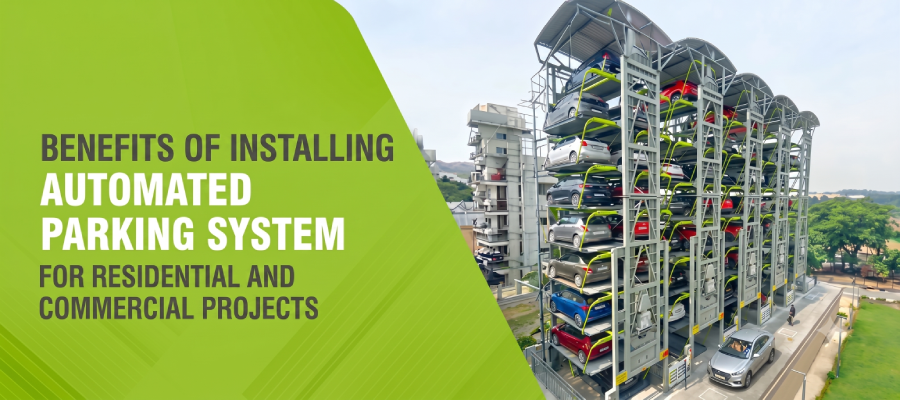
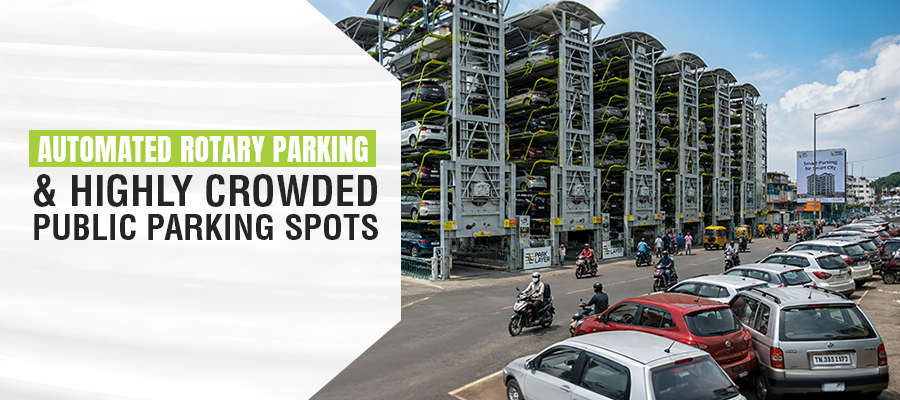
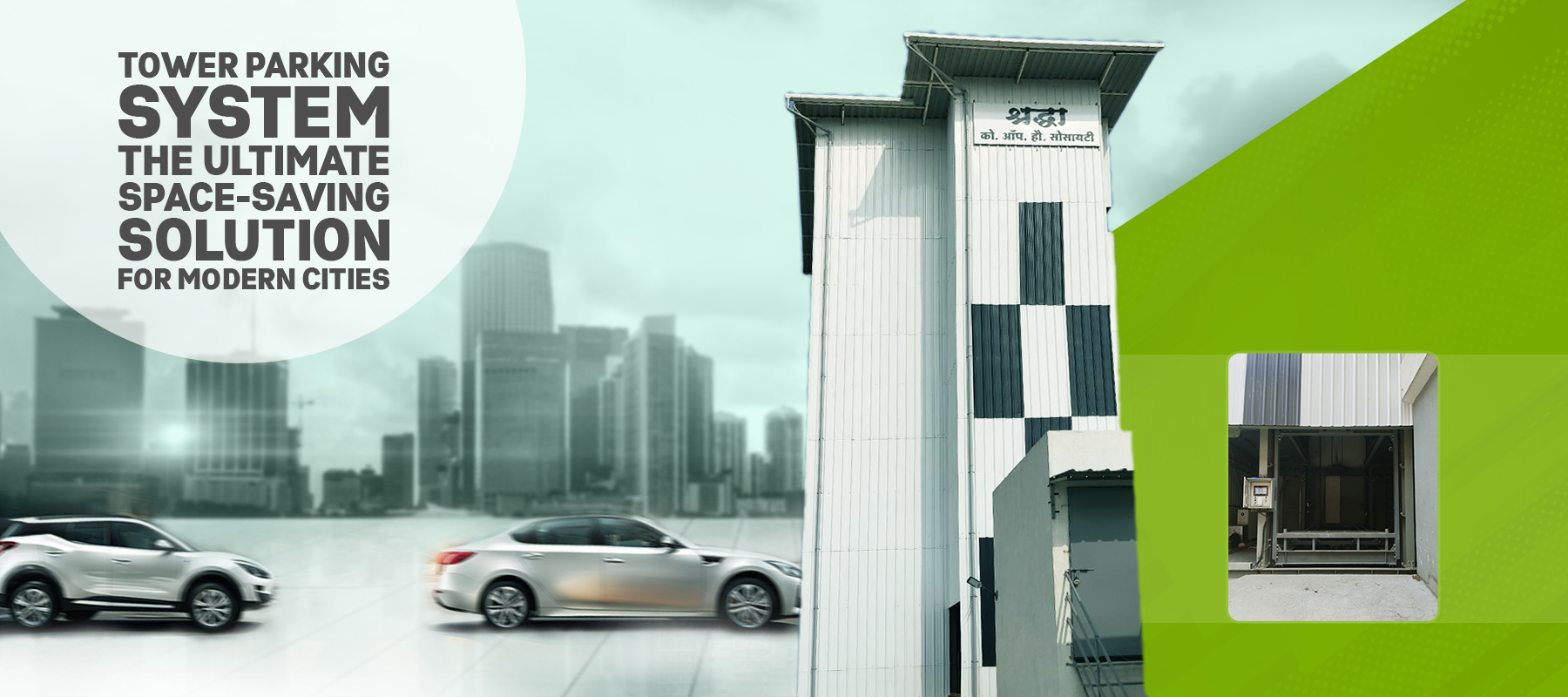
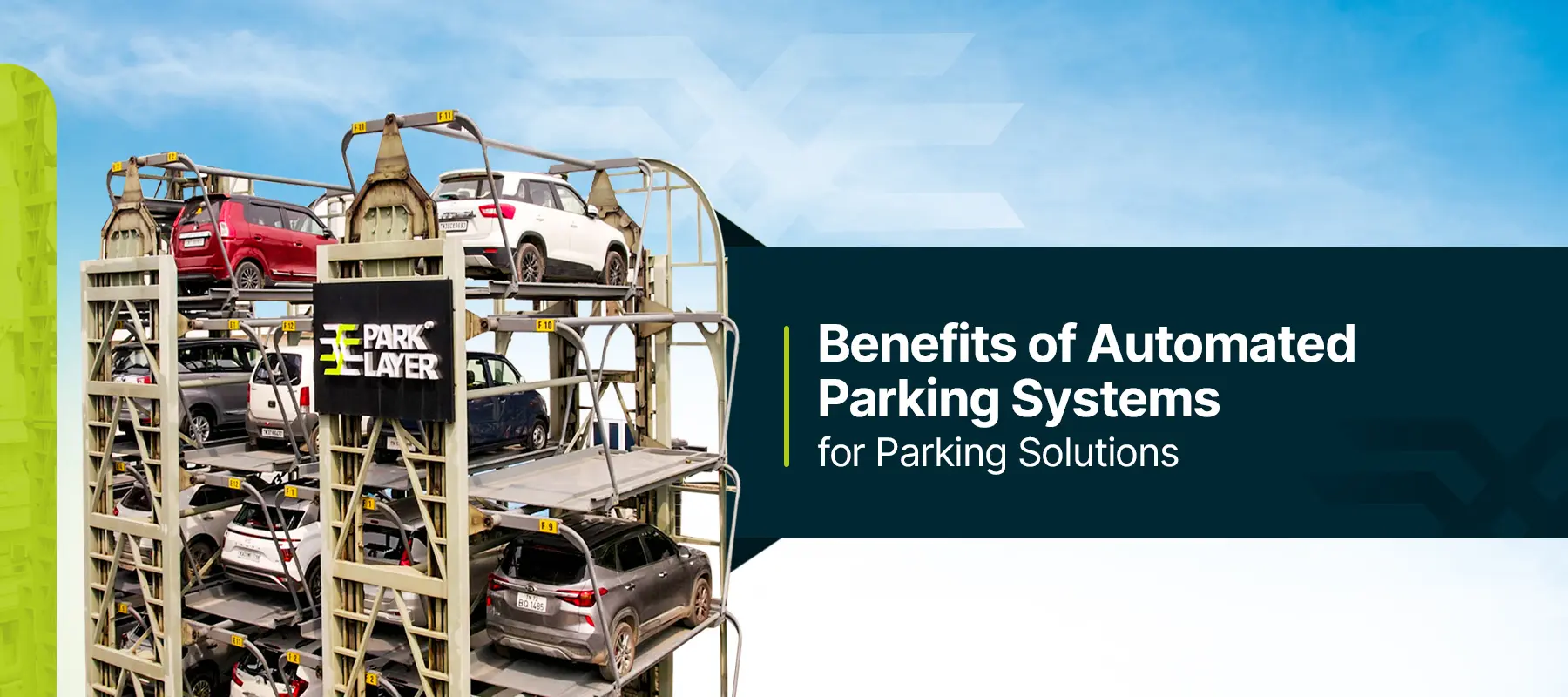
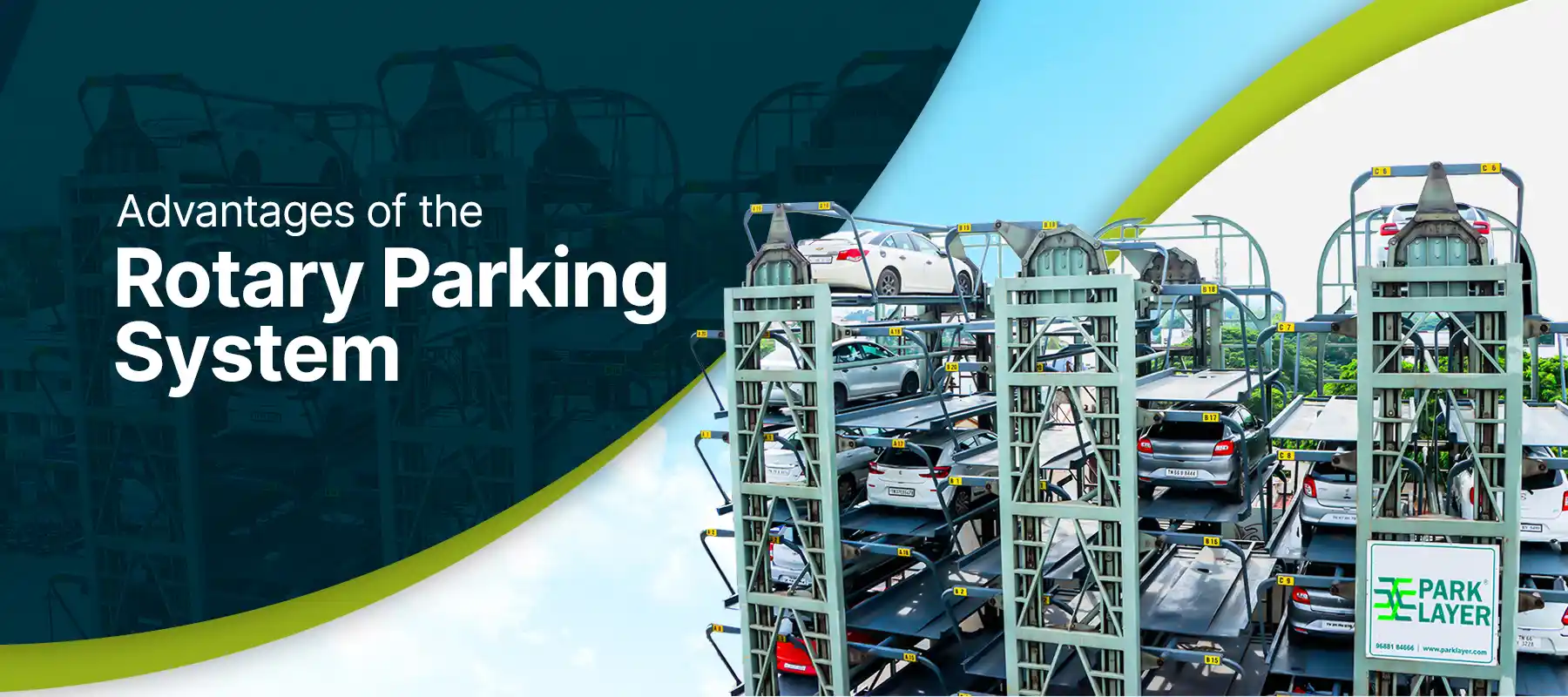
Tower parking eliminates this waste. Vehicles enter at ground level and are mechanically lifted into vertical slots. No ramps. No circulation space. No drivers navigating tight corners. Just vertical stacking with precision engineering.
The numbers are striking. A tower parking system occupying 8,000 square feet can accommodate 150-180 vehicles. Achieving similar capacity conventionally would require roughly 50,000 square feet, including access infrastructure. For urban properties where every square foot carries premium value, this difference transforms project economics entirely.
When Real Estate Math Demands Vertical Solutions
Municipal parking norms typically mandate 1.5 spaces per residential unit. For a 100-unit building, that's 150 parking spaces, roughly 50,000 square feet of traditional infrastructure.
The parking space alone in cities where prices for land are between ₹50,000 and ₹1 lakh per square foot translates to a staggering ₹25-50 crores of sunk capital, which generates zero revenue. The addition of other expenses related to building a basement (excavation work, waterproofing, ventilation, fire safety, and perpetual lighting) makes it even more staggering.
The tower parking is a paradigm shift in this regard. The same parking capacity is achieved in 10,000-12,000 square feet vertically. Then what about the remaining 40,000 square feet of space?
The answer is for other uses which can generate income streams, such as having additional units, retail space, landscaped areas, and recreational.
This isn't theoretical optimisation. It's practical economics determining project viability in land- constrained markets.
Proven Technology, Reliable Performance
Modern tower parking systems operate on mechanical principles refined through decades of global deployment. Korean manufacturers like Dong Yang PC have perfected automated parking technology across thousands of installations worldwide.
The process is straightforward. A driver enters the bay at ground level, exits the vehicle, and initiates parking via touchscreen or RFID card. The system lifts the vehicle to an available slot, stacking cars safely and efficiently. Retrieval typically takes 90 seconds.
Safety features include load-balance sensors, locking mechanisms, CCTV monitoring, and emergency backup systems. The reliability mirrors building elevators: technology so refined it becomes unremarkable in daily operation.
Energy efficiency offers an overlooked advantage. Traditional basement parking runs ventilation, lighting, and pumps continuously. Tower systems consume power only during active operations, minutes daily rather than 24/7. Over the years, this generates substantial savings.
Real Transformations in Indian Properties
A residential project in Panvel, Mumbai demonstrates tower parking's impact on space- constrained developments. The builder had allocated a specific area for parking, just 55.9 square meters with a 1,500mm pit depth. Given the severe space limitations, conventional parking was impossible.
The requirement was clear but challenging: accommodate 34 full-sized SUVs within the available footprint, with a height restriction of approximately 43 meters above ground level. Parklayer's tower parking system delivered exactly this, fitting 34 SUV-capacity slots vertically within the constrained space and specified height limits.
This installation exemplifies how tower parking unlocks projects that would otherwise fail parking requirement compliance. The builder didn't need to acquire additional land, excavate extensive basements, or compromise on the number of residential units. Vertical thinking solved what horizontal planning couldn't.
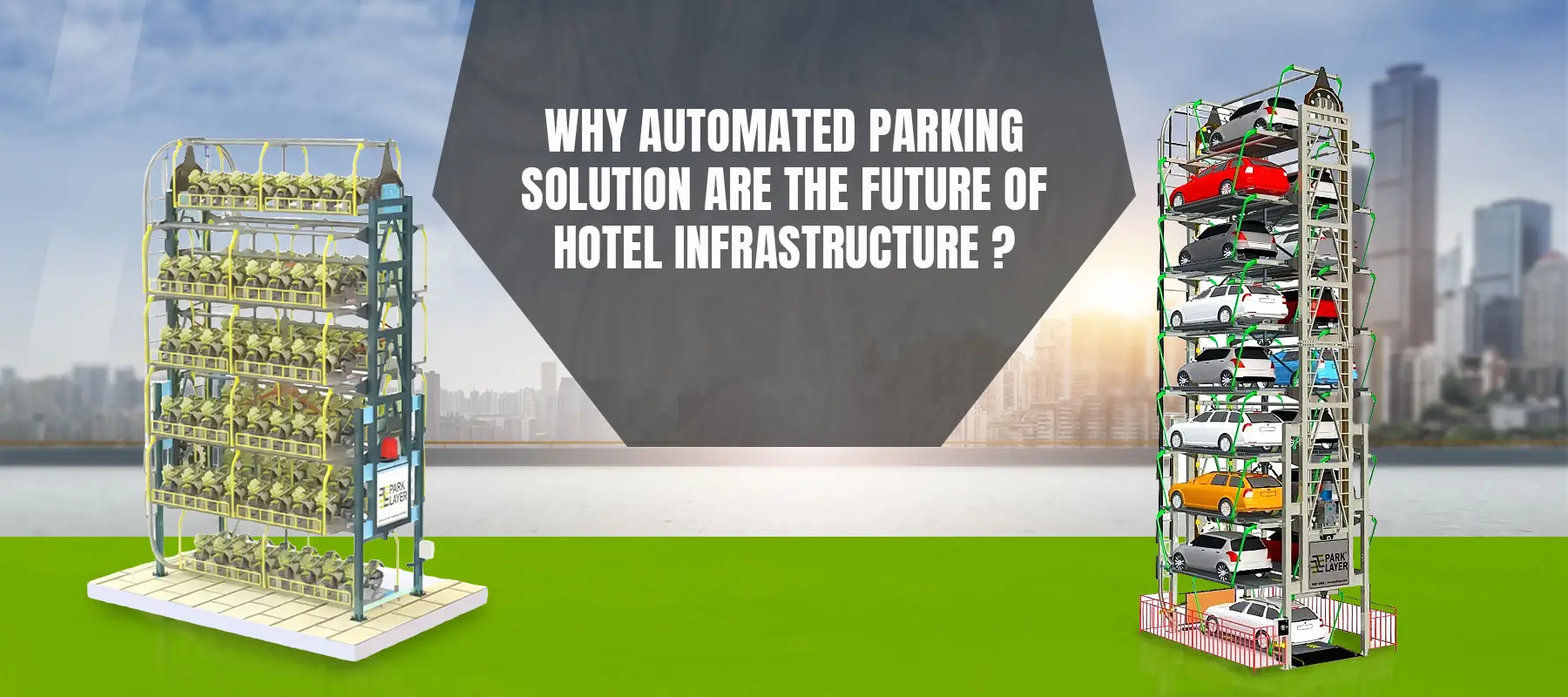
Hotels face persistent tension between parking requirements and revenue-generating space. Tower parking resolves this by preserving valuable ground area for restaurants, event spaces, or additional rooms while meeting parking demand vertically.
High-rise residential complexes face similar mathematics. When land costs dominate project economics, dedicating vast ground area to horizontal parking makes developments unviable. Tower systems unlock these constrained sites.
Corporate offices in business districts deal with dual pressures: limited space and employee parking expectations. Tower systems deliver municipal compliance while preserving rentable square footage.
Medical facilities particularly benefit from ground-level access. Emergency situations require efficient parking near entrances. Tower systems provide exactly this: vehicle entry at ground level with vertical storage above, combining accessibility with capacity.
The Sustainability Advantage
Tower parking delivers environmental benefits beyond space efficiency. Traditional multi-story parking requires vehicles circling up ramps, idling and emitting while hunting spots. Tower systems eliminate this. Cars are parked immediately and precisely.
Construction impact favours vertical systems significantly. Excavating basement levels requires enormous concrete, steel, and energy. Tower parking uses fractions of these resources while delivering comparable capacity.
The operational footprint differs markedly. Basement infrastructure runs continuously: ventilation, lighting, pumps. Tower systems operate only when actively used. For properties pursuing LEED certifications or meeting ESG requirements, this distinction carries measurable weight.
The Path Forward
India's trajectory points unmistakably toward vertical parking solutions. Land scarcity intensifies in urban locations. Vehicle ownership continues climbing. Municipal requirements tighten. Environmental pressures mount.
These trends don't reverse. They accelerate. Properties installing tower parking today position themselves for an urban future that's already arriving. They maximise land efficiency where land represents the primary cost. They meet parking requirements without sacrificing revenue- generating space. They offer differentiated amenities in competitive markets.
The technology exists, proven through global deployment and Indian installations demonstrating reliable operation. The question is when individual projects will recognise this reality during planning rather than discovering it too late.
Early adopters gain advantages in space efficiency, operational costs, and marketability. Late adopters find themselves retrofitting constrained projects or accepting parking limitations affecting property value.
The shift from horizontal to vertical parking mirrors a broader urban transformation. Cities grow upward because outward expansion is no longer viable. Parking infrastructure must follow the same logic: using vertical space intelligently where horizontal space has become prohibitively expensive.
Tower parking systems represent not just a parking solution, but fundamental rethinking of how urban properties use their most valuable asset: space itself.
© 2026. Parklayer Pvt Ltd. All rights reserved.